How the Biden Administration Has Helped Those Who Work in Technology

Dr. Kai Dupe • August 21, 2024

The Biden administration has introduced several policies and initiatives that have significantly impacted the tech sector and benefited American workers in the industry.

The Biden administration has introduced several policies and initiatives that have significantly impacted the tech sector and benefited American workers in the industry. These efforts have focused on fostering innovation, improving infrastructure, and promoting workforce development, ensuring that the United States remains a global leader in technology while creating opportunities for American tech professionals.


Investment in Infrastructure


One of the most significant ways the Biden administration has supported the tech sector is through its commitment to infrastructure improvements, particularly in broadband access. The Bipartisan Infrastructure Law, passed in 2021, allocated $65 billion to expand broadband access across the country ([White House] (
https://www.whitehouse.gov/briefing-room/statements-releases/2021/11/06/fact-sheet-the-bipartisan-infrastructure-deal/)). This investment has been critical in bridging the digital divide, ensuring that more Americans have access to high-speed internet. This expansion benefits tech workers by creating new job opportunities in network expansion, maintenance, and the deployment of 5G technology, while also enabling more remote work possibilities for tech professionals across the country.


Support for Innovation


The Biden administration has also emphasized the importance of innovation in maintaining the United States' competitive edge in the global tech industry.
The CHIPS and Science Act, signed into law in 2022, allocated over $50 billion to boost domestic semiconductor manufacturing ([Congress.gov](https://www.congress.gov/bill/117th-congress/house-bill/4346)). This move is crucial for reducing the United States' reliance on foreign-made chips, which are essential for various tech products, from smartphones to advanced computing systems. By supporting domestic production, the administration has helped secure the supply chain, benefiting American tech companies and workers alike.


Workforce Development


Recognizing the importance of a skilled workforce in the tech sector, the Biden administration has prioritized workforce development through initiatives like the American Rescue Plan and the Build Back Better agenda. These programs have included funding for job training and education, particularly in STEM (Science, Technology, Engineering, and Math) fields ([White House] (
https://www.whitehouse.gov/briefing-room/statements-releases/2021/03/11/fact-sheet-what-the-american-rescue-plan-means-for-you/)). By investing in education and reskilling programs, the administration has aimed to equip more Americans with the skills needed to succeed in the tech industry. This focus on workforce development ensures that tech companies have access to a diverse and talented pool of workers, helping to fill the growing demand for skilled professionals in fields like software development, cybersecurity, and data analysis.


Promoting Fair Labor Practices


The Biden administration has also taken steps to promote fair labor practices within the tech industry. Efforts to protect gig workers, many of whom work in tech-adjacent roles, have been a priority ([Labor Department] (
https://www.dol.gov/newsroom/releases/whd/whd20211109)). By pushing for labor policies that ensure fair wages and benefits for all workers, including those in the tech sector, the administration has sought to create a more equitable work environment.


So, whether you are a software developer, cloud engineer, or network admin you need to consider this.  The Biden administration's policies have had a positive impact on the tech sector, benefiting American workers through infrastructure improvements, support for innovation, workforce development, and fair labor practices. These efforts have helped secure the United States' position as a global leader in technology while creating new opportunities for tech professionals.

By Dr. Kai Dupe July 28, 2026
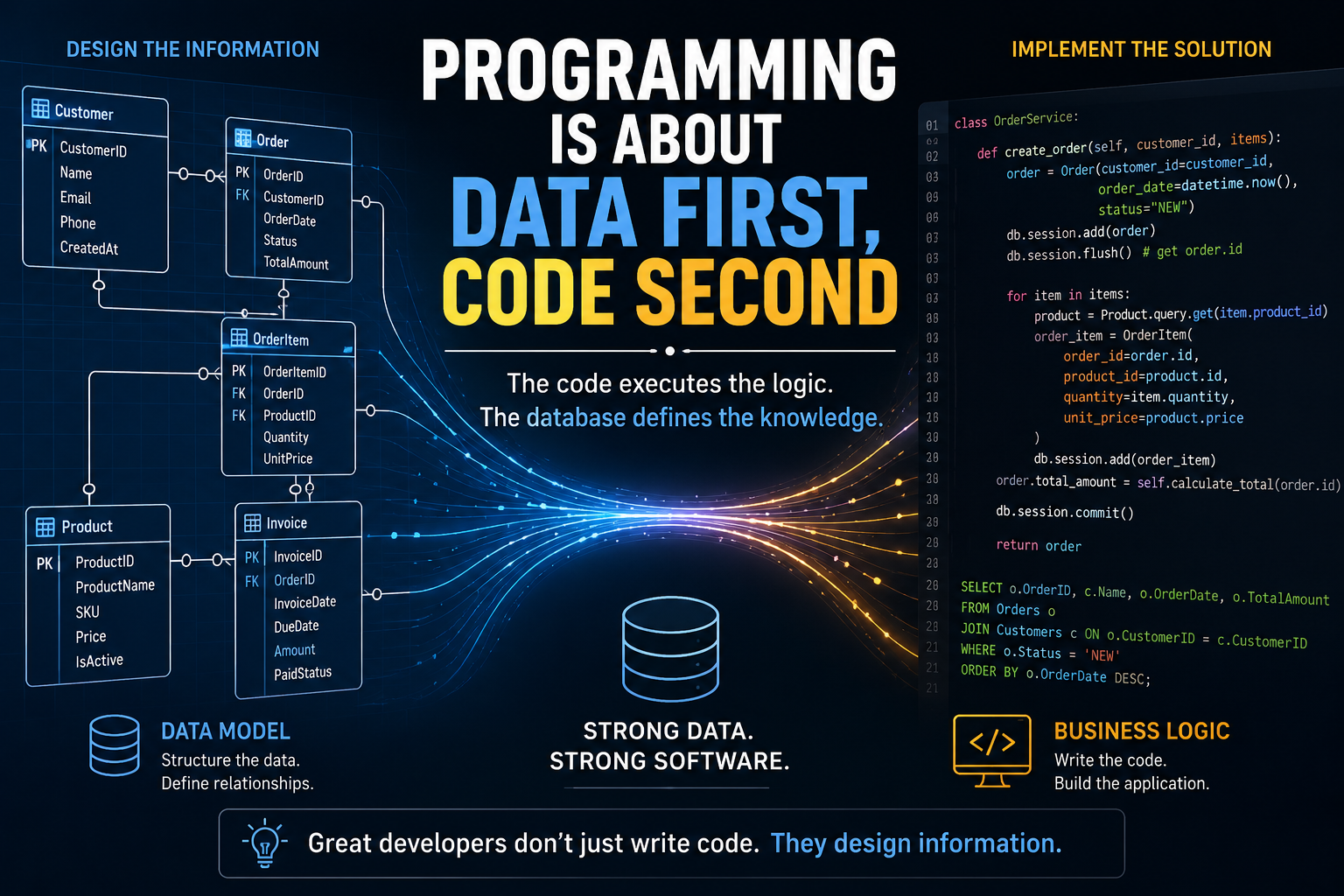
The truth is that most software applications exist to manage information.
By Dr. Kai Dupe July 1, 2026
Artificial intelligence has become the newest member of nearly every software development team.
By Dr. Kai Dupe June 17, 2026
The true promise of computing is not found in the machines we build, but in the human potential we unlock when knowledge becomes accessible to everyone.
By Dr. Kai Dupe June 3, 2026
One of the reasons I value the MCT program so highly is that it represents more than technical knowledge.
By Dr. Kai Dupe May 22, 2026
Software engineering is not simply coding.
By Dr. Kai Dupe May 15, 2026
Companies often promote the idea that technical skill alone determines success.
By Dr. Kai Dupe May 3, 2026
Hackathons also strengthen teamwork and communication skills.
By Dr. Kai Dupe April 22, 2026
Stepping onto the campus of Morehouse College this past weekend for Admitted Students Day was more than a visit—it was a moment of reflection. As I watched young Black men walk with purpose across the yard, I found myself asking a simple but profound question: What would it have been like for me to study computer science here? My journey into computing was shaped in environments where I was often the only Black man in the room. That reality brings with it an unspoken weight—the need to prove you belong, the awareness of being watched, and sometimes, the quiet isolation that comes with underrepresentation. Standing at Morehouse, I realized that this burden is not a given. It is a condition of the environment. At Morehouse, the environment is different by design. Here, Black men are not anomalies—they are the standard. I imagined what it would feel like to learn algorithms, data structures, and software development in a space where my identity was not questioned but affirmed. Where excellence is expected, not in spite of who you are, but because of it. As a computer science professor, I understand the academic rigor required to succeed in this field. There is no shortcut through recursion, no bypass around debugging, no substitute for disciplined problem-solving. But what struck me during my visit is how much context matters. When students are free from the psychological burden of proving they belong, they can redirect that energy toward mastering the material. They can collaborate more openly, ask questions more freely, and take intellectual risks without fear. I also thought about legacy. At Morehouse, students walk the same grounds as Martin Luther King Jr.. That kind of history does something to a person. It raises the bar—not just academically, but personally. It invites students to see their education not just as a pathway to a career, but as preparation for impact. Leaving campus, I felt inspired—but also reflective. I cannot rewrite my journey, but I can appreciate what spaces like Morehouse offer the next generation. For a Black male pursuing computer science, it is more than a degree. It is an opportunity to develop skill, confidence, and identity in alignment. And that combination is powerful.
By Dr. Kai Dupe March 25, 2026
If you walk into most computer science classrooms today, you might assume that computing has always been a male-dominated field. As someone who has spent decades in the industry and now teaches the next generation of developers, I can tell you—that assumption is not only common, it’s historically inaccurate. In the early days of computing, many of the first programmers were women. Ada Lovelace is widely recognized as the first computer programmer, having written what we would now call an algorithm for Charles Babbage’s Analytical Engine. Fast forward to the 1940s, and women were programming some of the first electronic computers, including ENIAC. These were not peripheral roles. These women were solving complex computational problems, often inventing programming techniques as they went (Abbate, 2012). So what happened? From a systems perspective, the answer is not mysterious—it’s structural. In its early stages, programming was considered clerical work. It required precision, patience, and attention to detail—qualities that, at the time, were socially assigned to women. But as computing became more central to business, government, and innovation, its status changed. What was once seen as routine work became prestigious and lucrative. And when that shift happened, the demographics shifted with it. By the 1980s, we see a clear inflection point. Personal computers entered the home—but they were marketed primarily to boys. This created an early access gap that translated into confidence, experience, and eventually career pathways. At the same time, hiring practices and workplace cultures began to favor men, reinforcing a feedback loop that pushed women out of the field (Hicks, 2017). Over time, the narrative changed. Computing was no longer something women had built—it became something they were seen as entering late. But that narrative is not just incomplete—it’s a distortion. Understanding this history is not about nostalgia; it’s about accuracy. When students learn that women were foundational to computing, it reshapes how they think about the field. Diversity is no longer framed as a modern intervention—it is recognized as part of computing’s original DNA. In my classroom, I’ve seen what happens when students encounter this truth. It disrupts assumptions. It broadens participation. And perhaps most importantly, it changes who students believe belongs in this space. So, if women were the original programmers, what happened? Part of the answer lies in systems—education, marketing, hiring, and culture. But another part lies in storytelling. The stories we tell about computing shape who feels invited to participate in it. As educators, technologists, and leaders, we have an opportunity—and a responsibility—to tell that story more accurately. References Abbate, J. (2012). Recoding Gender: Women’s Changing Participation in Computing. MIT Press. Hicks, M. (2017). Programmed Inequality: How Britain Discarded Women Technologists and Lost Its Edge in Computing. MIT Press. Evans, C. L. (2018). Broad Band: The Untold Story of the Women Who Made the Internet. Portfolio. Shetterly, M. L. (2016). Hidden Figures. HarperCollins.
By Dr. Kai Dupe March 17, 2026
During Women's History Month, we often celebrate women who have made groundbreaking contributions to science and technology. What many people do not realize, however, is that in the earliest years of the computing industry, programming was largely done by women. This overlooked chapter of history reveals how deeply women helped shape modern computing—and how cultural shifts later obscured their contributions. One of the most famous examples comes from the development of the ENIAC, one of the first general-purpose electronic computers built during World War II. When the machine was unveiled in 1946, public attention focused primarily on the hardware and the male engineers who built it. Yet the individuals responsible for programming the computer were six women mathematicians: Jean Bartik, Kathleen McNulty, Betty Jennings, Frances Bilas, Ruth Lichterman, and Marlyn Wescoff. Their work was extraordinarily complex. Programming ENIAC did not involve writing code in a modern programming language. Instead, they programmed the machine by rewiring plugboards, configuring switches, and designing logical sequences of operations to compute ballistic trajectories for the U.S. military. In effect, they were inventing the practice of programming as they went along. Despite the significance of their work, these women were largely left out of the early historical record. Photographs from the ENIAC project sometimes showed them standing beside the machine, but they were often misidentified as models rather than as the programmers who made the system function. For decades, their contributions were largely forgotten. Women continued to play critical roles in computing in the years that followed. One notable figure was Grace Hopper, who helped develop one of the first compilers and contributed to the development of the programming language COBOL. Her work helped transform programming from a hardware-focused task into the software-driven discipline we know today. Ironically, programming was not initially considered a prestigious profession. In the early decades of computing, it was sometimes viewed as routine clerical work, and organizations often hired women to perform it. However, as software became more central to the technology industry in the 1960s and 1970s, the status of programming began to change. Companies started redefining the role as a highly technical and prestigious occupation. At the same time, hiring practices began emphasizing personality profiles and educational pathways that favored men, while early home computers were heavily marketed to boys. These cultural and institutional shifts gradually pushed many women out of the field. By the 1980s, computer science programs had become overwhelmingly male-dominated, creating the demographic pattern that still exists in much of the technology industry today. Understanding this history reminds us that the gender imbalance in computing is not inevitable or inherent to the field. Women were present at the very beginning of modern computing and were instrumental in building the foundations of programming itself. For readers interested in learning more, two excellent resources are Recoding Gender by Janet Abbate, which examines the historical role of women in computing, and Broad Band by Claire L. Evans, a narrative history of women’s contributions to the development of the internet and computing culture.