
Making Technology Relevant
Dr. Kai Dupe • May 1, 2021
Making Technology Relevant
I have always been the kind of student who wanted to know why I had to learn a certain subject. When I was in middle school I remember asking my algebra teacher, “Why do I need to learn algebra?” ‘What will I need algebra for in my life?” It simply was not good enough to say to me: “Trust me You will need it one day.” My attitude was well when one day comes that is the day I will be interested in learning algebra! My learning needed to have purpose. It still does. Even as an adult, there must be purpose and value in my learning. If I do not see the point or how acquiring a new skill will be useful in my life I simply will not be motivated to learn. And I am the same way when it comes to technology. My use of technology has to have purpose. It has to in some way enhance my life, allow me to be more productive, save time, or allow me to make money.
In other words it has to be relevant to my life and what is important to me. Many times when we want others to embrace a new technology we bombard them with new jargon and explain to them why our new device or software is cool to us. What we fail to realize is that if we wish for them to embrace the technology we should be spending our time explaining to them why the new piece of technology would be cool for them.
Recently, I was having breakfast at a Black-owned restaurant. After I finished my meal I wondered if the owner had thought about using social media for marketing his business. When I asked him about using Facebook as a marketing tool he told me “Facebook was more trouble that it is worth.”
I asked him how he arrived at that conclusion.
He smiled and said he did not have any real evidence for the statement, he just did not see how using Facebook could help his business. I took that to mean he did not understand how Facebook could add value to his business.
Of course it could but the owner was asking me the same question I asked my algebra teacher: Why should I care about Facebook? How is it relevant to my life? What is in it for me? Granted. He was an older gentleman and a technology such as Facebook may have been new to him which may make embracing the new technology more challenging than it would be for a digital native.
However, this assessment of relevance takes place for the younger generation as well. It is one of the reasons the average age of users on LinkedIn is much higher than it is on Facebook. LinkedIn is not quite as relevant to those who are in college or younger since they are not part of the workforce and have yet to take cultivating business relationships as seriously.
The point is often times people need help seeing why a technology is relevant and it is up to those of us who are professional technologists to help them to see the light.
If we want to persuade our people to embrace technology we need to make technology relevant to them. At a recent engagement a young woman asked me how she could get her son to be more interested in technology. I asked her what was her son’s main interest?
She told me he was a football fanatic. I told her to show her son where football and technology intersect. If he loves football and he can see how his football activities can be enhanced via technology, it is game over (no pun intended).She would not be persuading him to embrace technology, she would be showing him how technology fits into what matters most to him, in this case football.
I use this same technique when teaching computer programming classes. I tap into an interest a student has and relate that interest to computer programming. As an instructor, I make sure my students never feel that they are starting from zero even though they we may be dealing with a new subject.
This is a common occurrence for me when I ask business owners in our communities why they are not using a certain technology to solve a problem with their business. I am slightly irritated when the other business in the same area that are not Black-owned has the “Like Us” Facebook sticker in their window. In order to be more competitive we must do a better job of explaining to our people why embracing and learning a new technology can be valuable to their business and our communities. The next time I visit that restaurant I will be armed with the information I need to explain to the owner how Facebook and social media is not only worth the “trouble” but also how it can help him to better learn his existing customers as well as attract new ones.
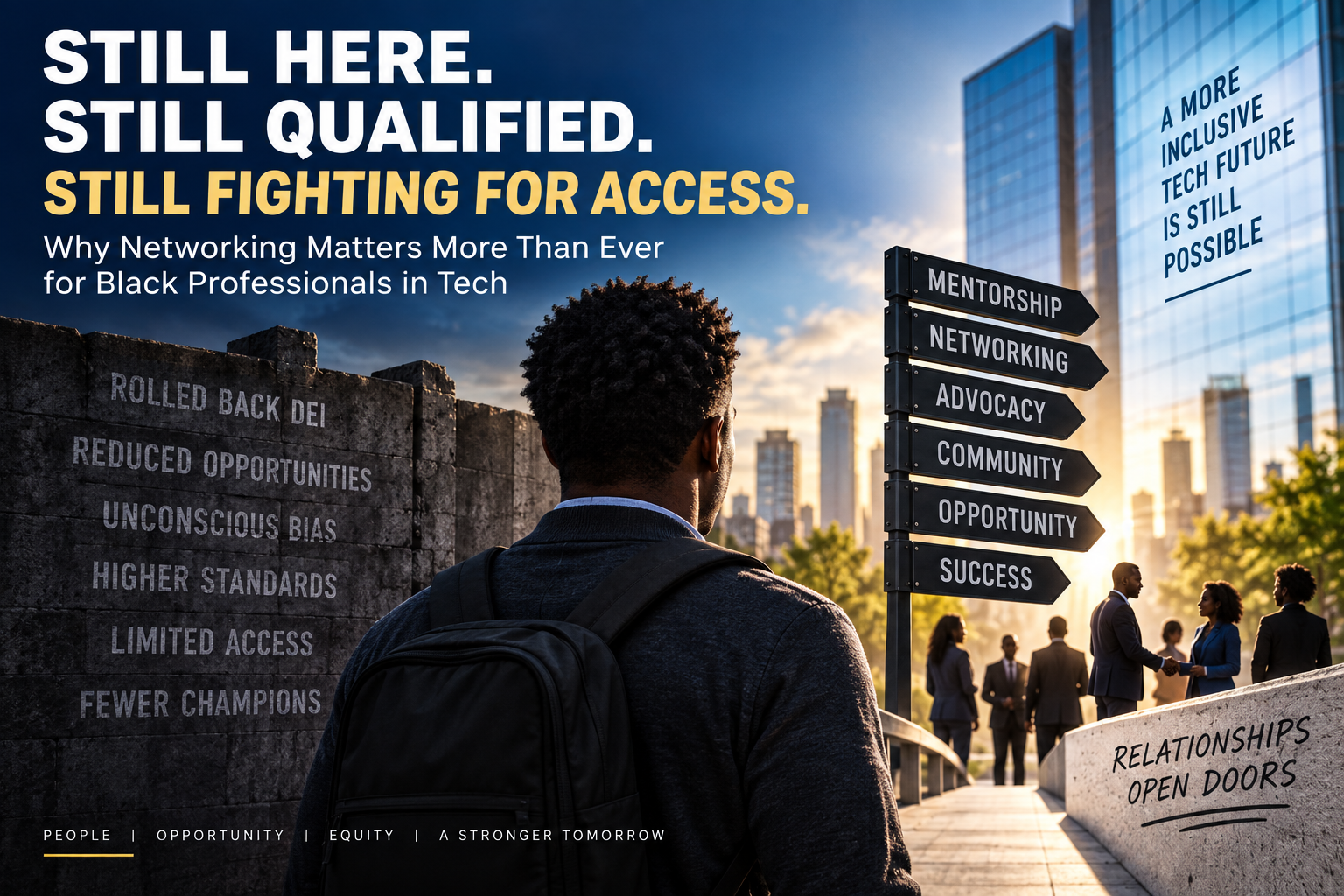
A mentor gives you advice. A sponsor creates opportunities.
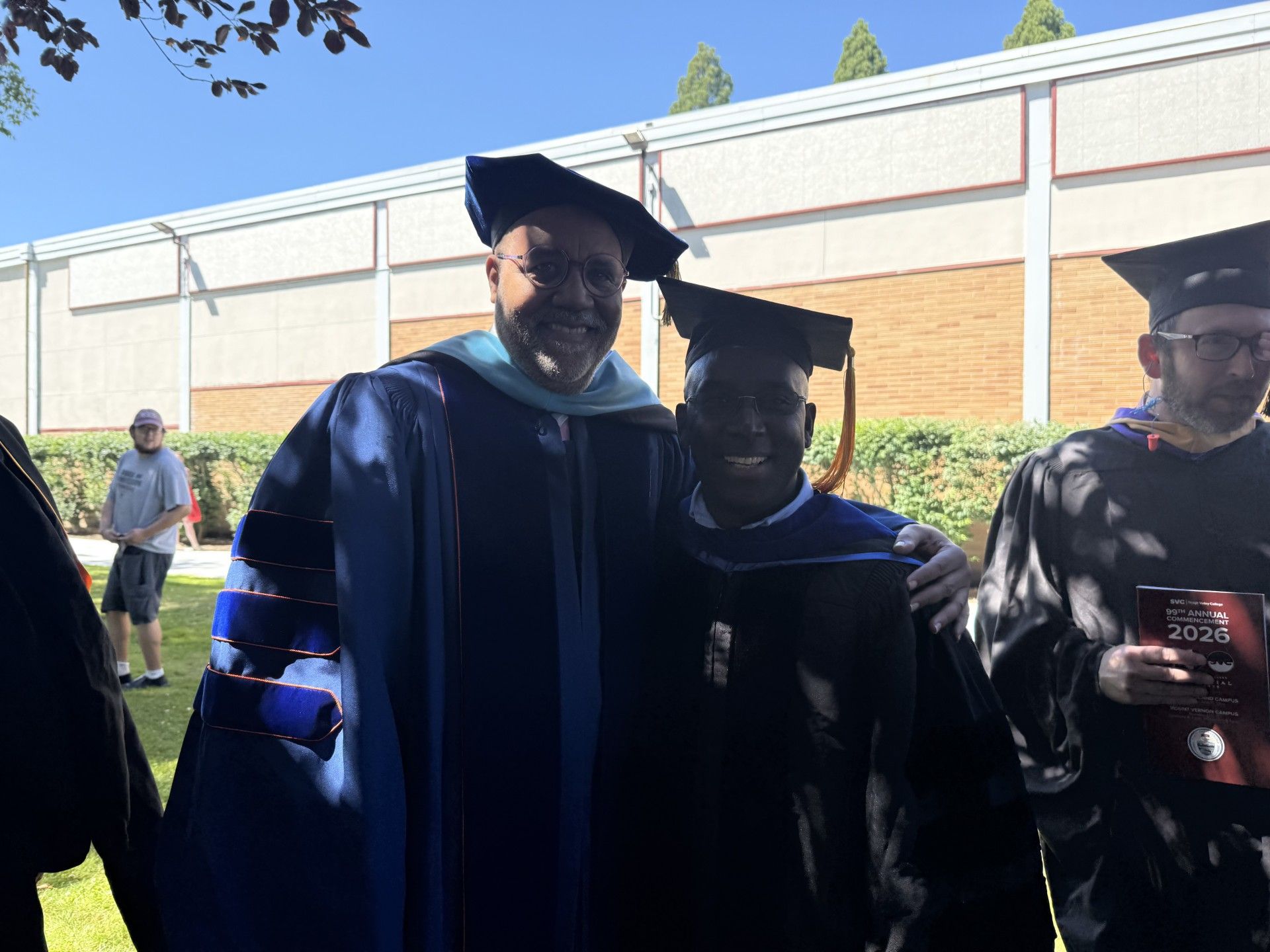
Representation alone will not solve the persistent racial disparities in computing.

The truth is that most software applications exist to manage information.
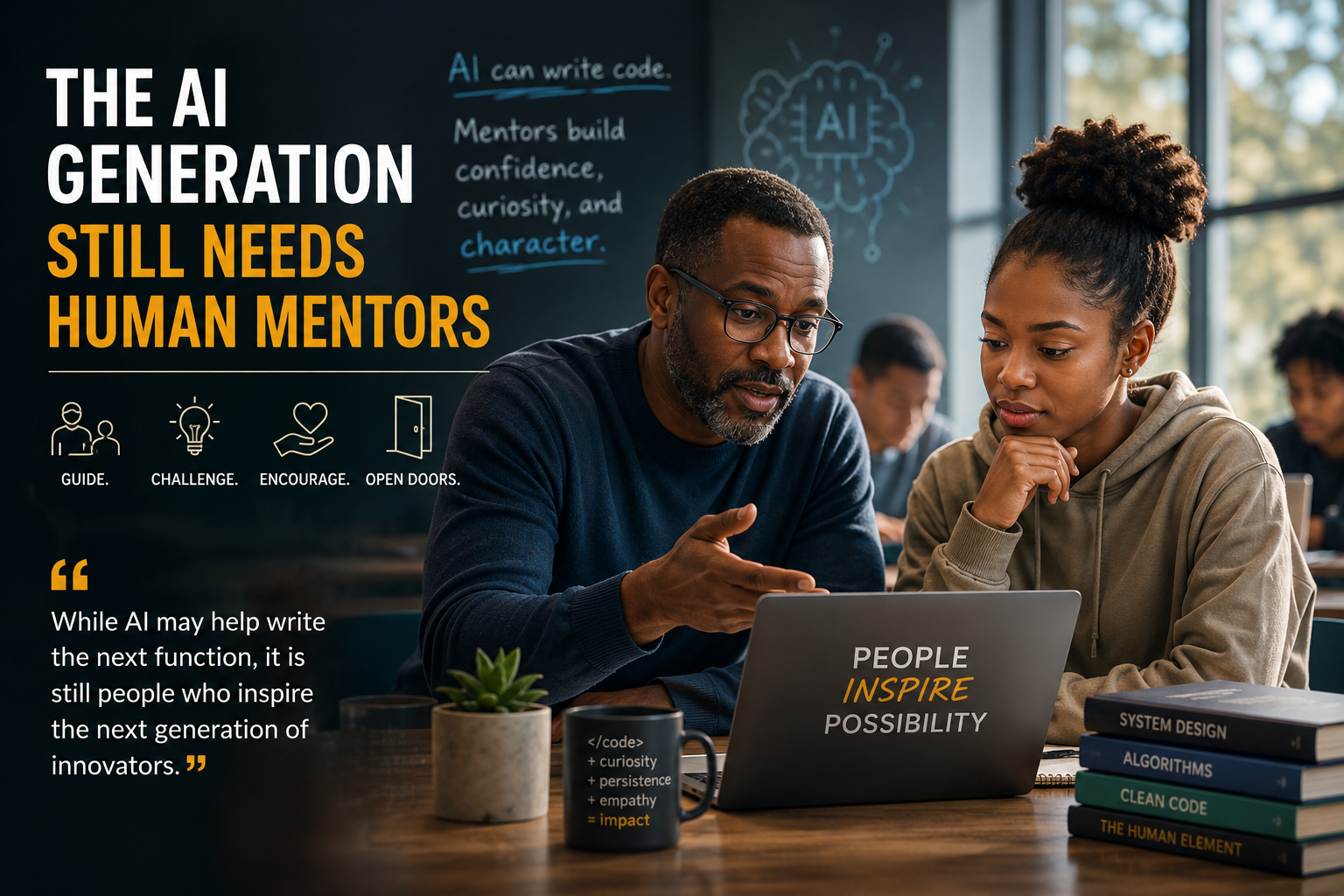
Artificial intelligence has become the newest member of nearly every software development team.

The true promise of computing is not found in the machines we build, but in the human potential we unlock when knowledge becomes accessible to everyone.

One of the reasons I value the MCT program so highly is that it represents more than technical knowledge.
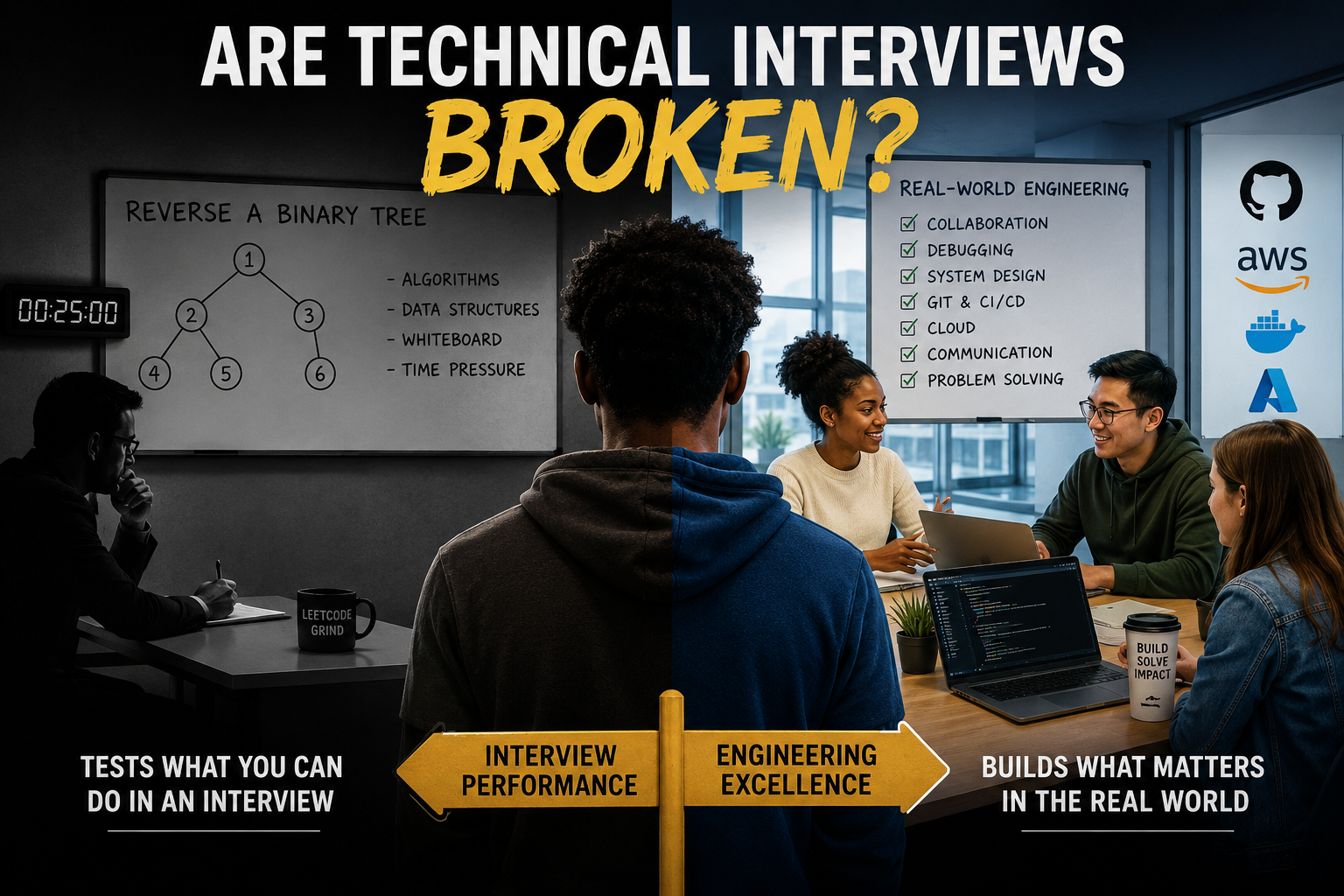
Software engineering is not simply coding.

Companies often promote the idea that technical skill alone determines success.
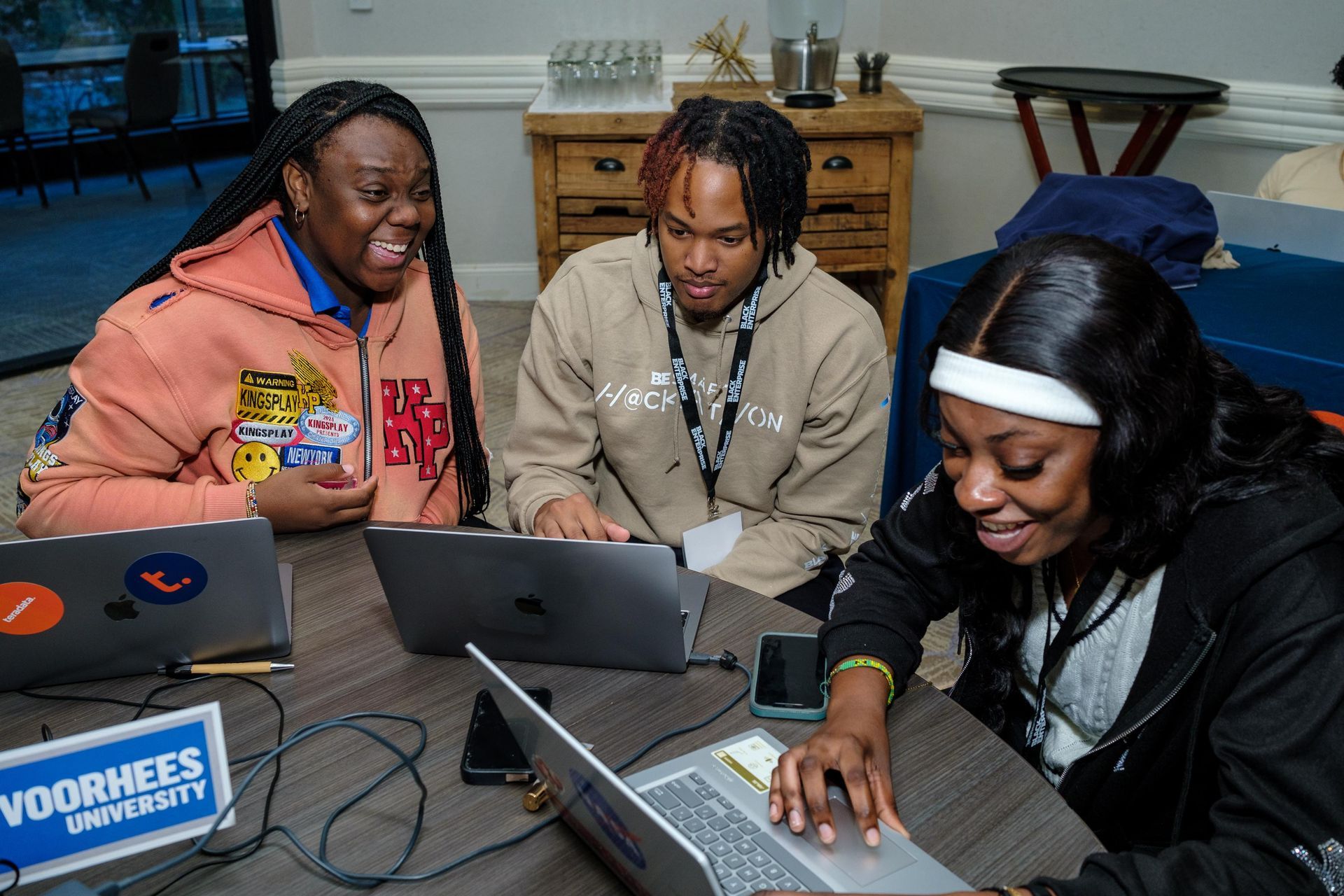
Hackathons also strengthen teamwork and communication skills.
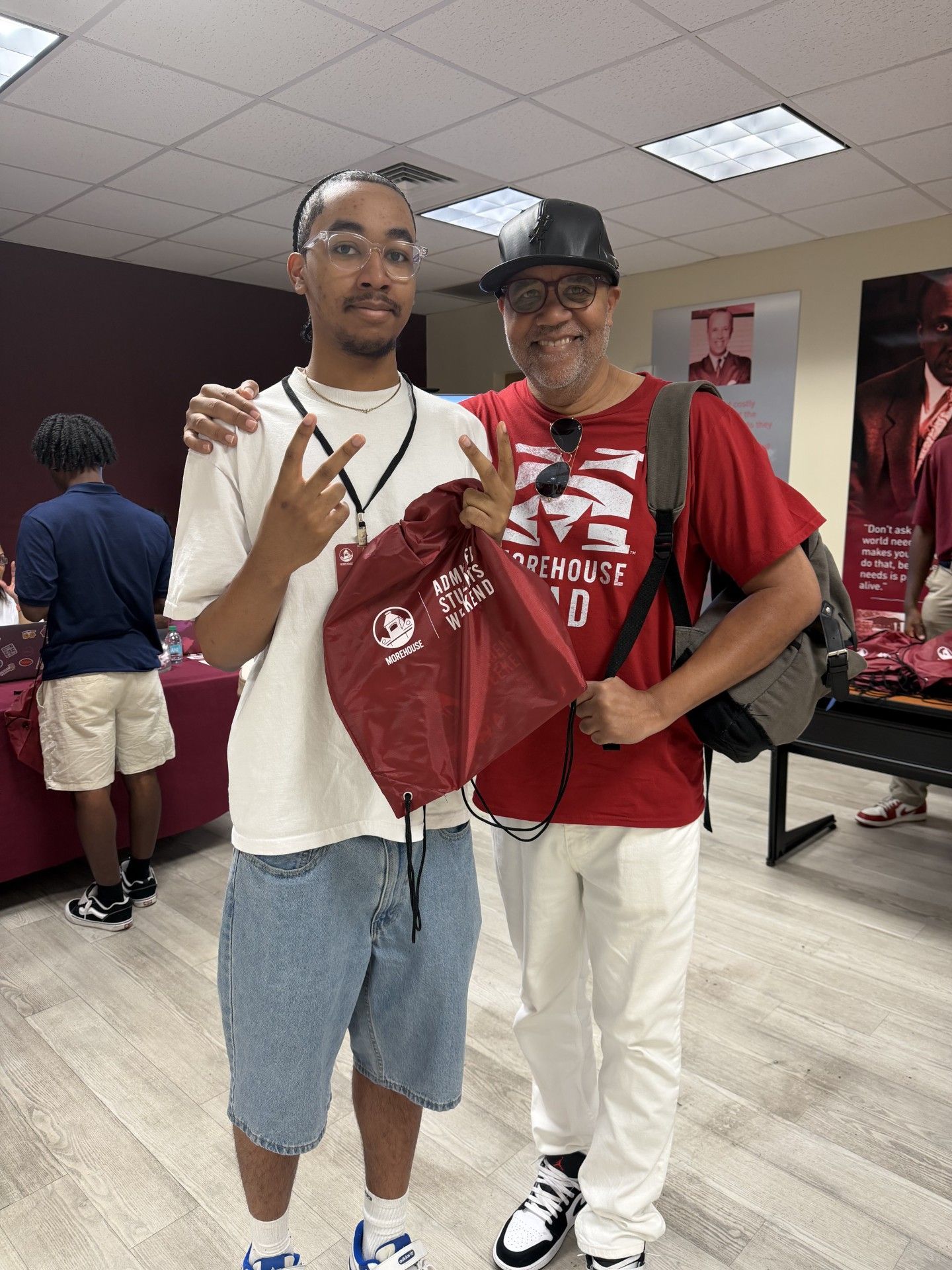
Stepping onto the campus of Morehouse College this past weekend for Admitted Students Day was more than a visit—it was a moment of reflection. As I watched young Black men walk with purpose across the yard, I found myself asking a simple but profound question: What would it have been like for me to study computer science here? My journey into computing was shaped in environments where I was often the only Black man in the room. That reality brings with it an unspoken weight—the need to prove you belong, the awareness of being watched, and sometimes, the quiet isolation that comes with underrepresentation. Standing at Morehouse, I realized that this burden is not a given. It is a condition of the environment. At Morehouse, the environment is different by design. Here, Black men are not anomalies—they are the standard. I imagined what it would feel like to learn algorithms, data structures, and software development in a space where my identity was not questioned but affirmed. Where excellence is expected, not in spite of who you are, but because of it. As a computer science professor, I understand the academic rigor required to succeed in this field. There is no shortcut through recursion, no bypass around debugging, no substitute for disciplined problem-solving. But what struck me during my visit is how much context matters. When students are free from the psychological burden of proving they belong, they can redirect that energy toward mastering the material. They can collaborate more openly, ask questions more freely, and take intellectual risks without fear. I also thought about legacy. At Morehouse, students walk the same grounds as Martin Luther King Jr.. That kind of history does something to a person. It raises the bar—not just academically, but personally. It invites students to see their education not just as a pathway to a career, but as preparation for impact. Leaving campus, I felt inspired—but also reflective. I cannot rewrite my journey, but I can appreciate what spaces like Morehouse offer the next generation. For a Black male pursuing computer science, it is more than a degree. It is an opportunity to develop skill, confidence, and identity in alignment. And that combination is powerful.