How to Make Virtual Training More Engaging

Dr. Kai Dupe • September 16, 2024

Incorporating polls, quizzes, and live Q&A sessions keeps participants actively involved throughout the session.

As virtual training becomes increasingly prevalent, ensuring that learners remain engaged and motivated has become a top priority for organizations. The success of a training session hinges not just on the content but also on how it’s delivered. To create an engaging virtual training experience, here are three proven strategies supported by evidence.


Incorporate Interactive Elements


Research shows that interaction boosts attention and retention. Incorporating polls, quizzes, and live Q&A sessions keeps participants actively involved throughout the session. Tools like Kahoot, Zoom polls, and real-time feedback mechanisms encourage participants to think critically about the material rather than passively absorb it. According to a study by Kapp and O'Driscoll (2010), interactive elements increase learning retention by up to 60% because they stimulate cognitive engagement. Virtual learning is more effective when learners can engage with the content dynamically, rather than just listening or reading.


Utilize Breakout Rooms for Collaborative Learning


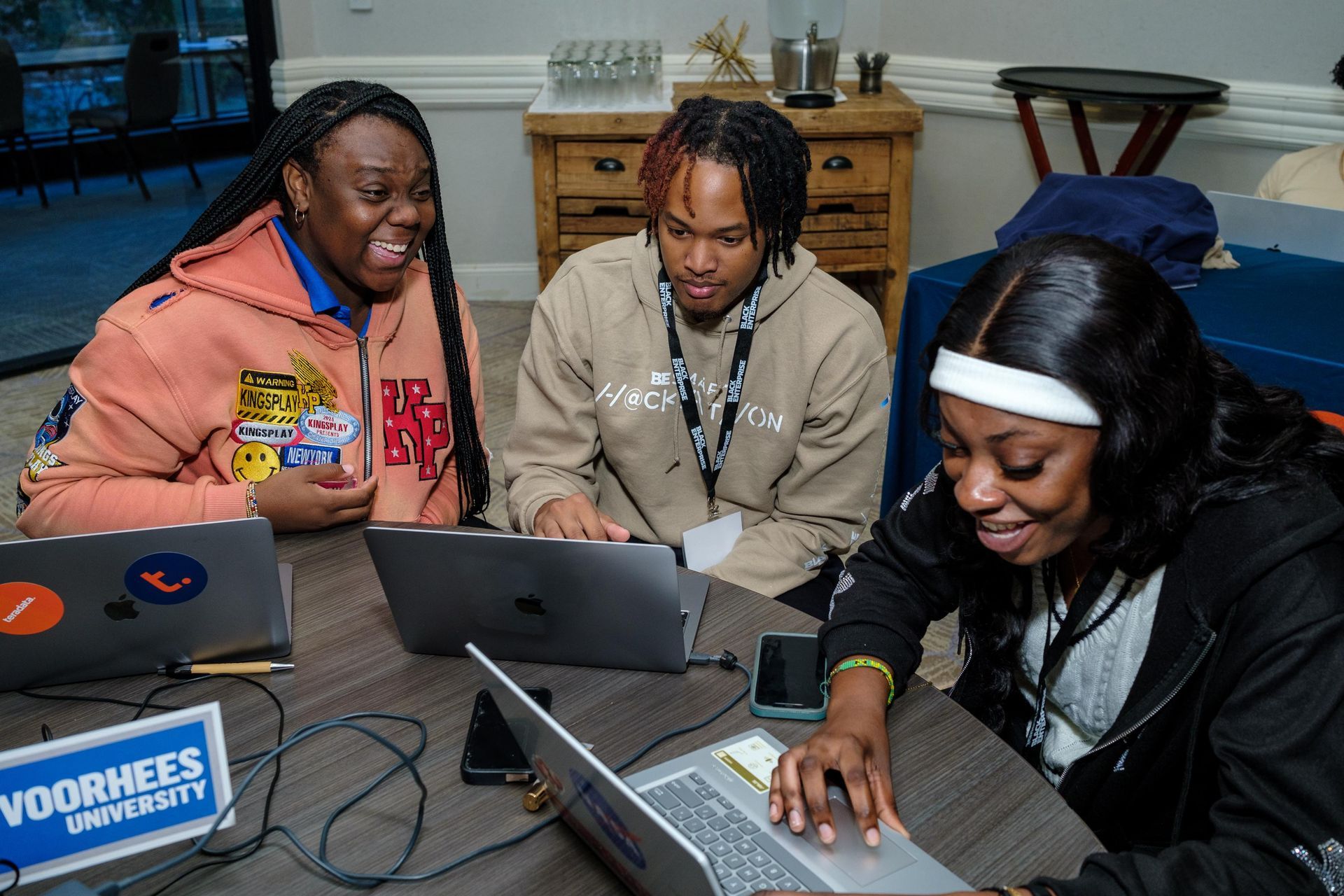
Virtual breakout rooms allow smaller groups of learners to engage in discussions, collaborate on tasks, or problem-solve together. This strategy is particularly effective for adult learners, as it facilitates peer-to-peer learning and knowledge sharing. A study conducted by Garrison and Cleveland-Innes (2005) highlighted the positive impact of collaborative learning on student engagement, noting that discussion-based activities foster deeper understanding and higher levels of cognitive engagement. Breakout rooms offer learners a chance to interact more intimately and develop skills like teamwork and communication in a virtual space.


Gamify the Learning Experience


Gamification applies game design elements—such as points, leaderboards, and rewards—to non-game contexts, creating a sense of competition and achievement that motivates learners. Studies demonstrate that gamification increases engagement by making learning more enjoyable and immersive. According to a study by Hamari et al. (2014), gamified elements in e-learning increase participation rates and motivation, particularly when learners feel rewarded for their progress. Whether through badges for completing modules or leaderboards that showcase top performers, incorporating gamification creates a sense of achievement and encourages learners to stay engaged throughout the training.


Conclusion


Making virtual training more engaging requires intentional design choices that promote active participation and motivation. By incorporating interactive elements, utilizing breakout rooms for collaboration, and applying gamification strategies, organizations can significantly improve learner engagement. These approaches are not just trends but are backed by research showing their effectiveness in improving retention, motivation, and overall training outcomes. In an era where virtual learning is becoming the norm, these strategies can help ensure that learners stay focused and engaged from start to finish. 

By Dr. Kai Dupe September 18, 2026
A mentor gives you advice. A sponsor creates opportunities.
By Dr. Kai Dupe August 20, 2026
Representation alone will not solve the persistent racial disparities in computing.
By Dr. Kai Dupe July 28, 2026
The truth is that most software applications exist to manage information.
By Dr. Kai Dupe July 1, 2026
Artificial intelligence has become the newest member of nearly every software development team.
By Dr. Kai Dupe June 17, 2026
The true promise of computing is not found in the machines we build, but in the human potential we unlock when knowledge becomes accessible to everyone.
By Dr. Kai Dupe June 3, 2026
One of the reasons I value the MCT program so highly is that it represents more than technical knowledge.
By Dr. Kai Dupe May 22, 2026
Software engineering is not simply coding.
By Dr. Kai Dupe May 15, 2026
Companies often promote the idea that technical skill alone determines success.
By Dr. Kai Dupe May 3, 2026
Hackathons also strengthen teamwork and communication skills.
By Dr. Kai Dupe April 22, 2026
Stepping onto the campus of Morehouse College this past weekend for Admitted Students Day was more than a visit—it was a moment of reflection. As I watched young Black men walk with purpose across the yard, I found myself asking a simple but profound question: What would it have been like for me to study computer science here? My journey into computing was shaped in environments where I was often the only Black man in the room. That reality brings with it an unspoken weight—the need to prove you belong, the awareness of being watched, and sometimes, the quiet isolation that comes with underrepresentation. Standing at Morehouse, I realized that this burden is not a given. It is a condition of the environment. At Morehouse, the environment is different by design. Here, Black men are not anomalies—they are the standard. I imagined what it would feel like to learn algorithms, data structures, and software development in a space where my identity was not questioned but affirmed. Where excellence is expected, not in spite of who you are, but because of it. As a computer science professor, I understand the academic rigor required to succeed in this field. There is no shortcut through recursion, no bypass around debugging, no substitute for disciplined problem-solving. But what struck me during my visit is how much context matters. When students are free from the psychological burden of proving they belong, they can redirect that energy toward mastering the material. They can collaborate more openly, ask questions more freely, and take intellectual risks without fear. I also thought about legacy. At Morehouse, students walk the same grounds as Martin Luther King Jr.. That kind of history does something to a person. It raises the bar—not just academically, but personally. It invites students to see their education not just as a pathway to a career, but as preparation for impact. Leaving campus, I felt inspired—but also reflective. I cannot rewrite my journey, but I can appreciate what spaces like Morehouse offer the next generation. For a Black male pursuing computer science, it is more than a degree. It is an opportunity to develop skill, confidence, and identity in alignment. And that combination is powerful.