
Why Technology Networks Are Important to African Americans
Kai Dupé • June 18, 2021
Mentorship is Key

The lack of support networks has been identified as a critical aspect to involving more African Americans in the fields of science, technology, engineering and math (STEM). While I agree that this is very important, I do not agree that African Americans lack technology support groups. I assert that the problem is that the African American community at large is not aware of the networks that do exist.
There are three that I have worked with over the years. I am sure there are others, and I am even more certain that most of our people, particularly our young people are not aware of these groups. I know this because I do quite a bit of public speaking around the country. When I ask students if they are familiar with The Black Data Processing Associates (BDPA), or Blacks In Technology the answer is invariably no.
In all fairness, Blacks in Technology has only been around for about ten years. But BDPA has been around since 1975. I have been a professional software developer since 1986 and I had been in my career for at least 20 years before I became aware of BDPA. We must do a better job of making our folks aware of these organizations.
This is not an indictment against BDPA as I personally know that they make every effort to ensure that our people know about their good work. The charge is ours. Any time I speak to a young person who has demonstrated an interest in technology, the first question I ask is ‘where do you live’ and if BDPA has a chapter in that city, I direct him or her to contact the chapter in their area.
The abundance of knowledge, experiences and social capital that exists within BDPA must be leveraged if our community is to become a player in the global technology game. As a speaker and technical instructor, I am constantly receiving questions related to technology and how to get involved in the technology field from aspiring technologists.
I am happy to answer these questions but how much better would it be for the learner to not only pose the question to a larger group but possibly someone who has experienced the same circumstances. This is a common occurrence on the web community, Blacks In Technology (BIT).
BIT is a wonderful online community of Black technologists who are ready to share their stories, knowledge, wisdom and encouragement not only to those who are looking for others like themselves who are already involved in technology careers but also those who are just starting down their career paths.
Without these kinds of support groups, African Americans in technology may began to deal with feelings of isolation. I can attest to this circumstance personally. Since I graduated from college with my undergraduate degree in computer science in 1986, I have rarely had the pleasure of working in an IT department with another African American.
This issue of isolation occurs in high school, the workplace as well as on college campuses. It is also one of the main reasons that African Americans do not persist in STEM careers. Several researchers studying this issue from S. Craig Watkins in his book The Young and the Digital as well as Jane Margolis in the book Stuck in the Shallow End have reported on the importance of support groups or networks to combat the issue of isolation.
I would have loved being a part of either of these groups when I first became a software engineer. Why? Because it is great to be able to speak with someone who can relate to your circumstances. It would have been great to be able to be counseled by someone who has already walked down the path and scaled the obstacles.
I can remember having to explain to members of my family and friends what exactly it was that I did as a computer programmer. The people in my community simply did not understand that I was CREATING software, not using it! I also never had anyone to talk shop with for the early years of my career.
Technology support groups do indeed exist in the African American community. However, they become less effective if they are unknown to the people who can benefit from them the most. We must do a better job of promoting the efforts of these groups to remove yet another obstacle to the inclusion of African Americans participation in the digital society.
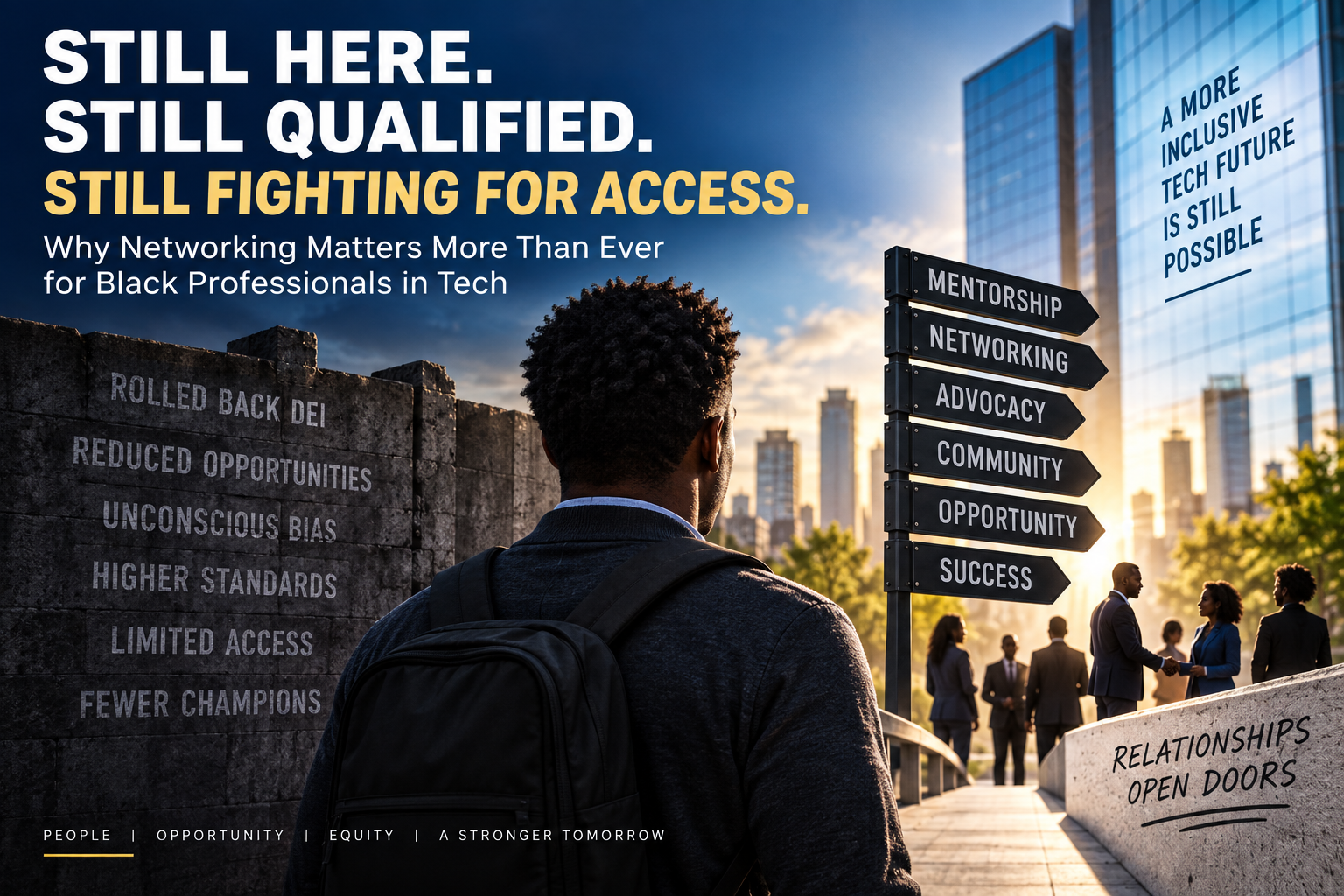
A mentor gives you advice. A sponsor creates opportunities.
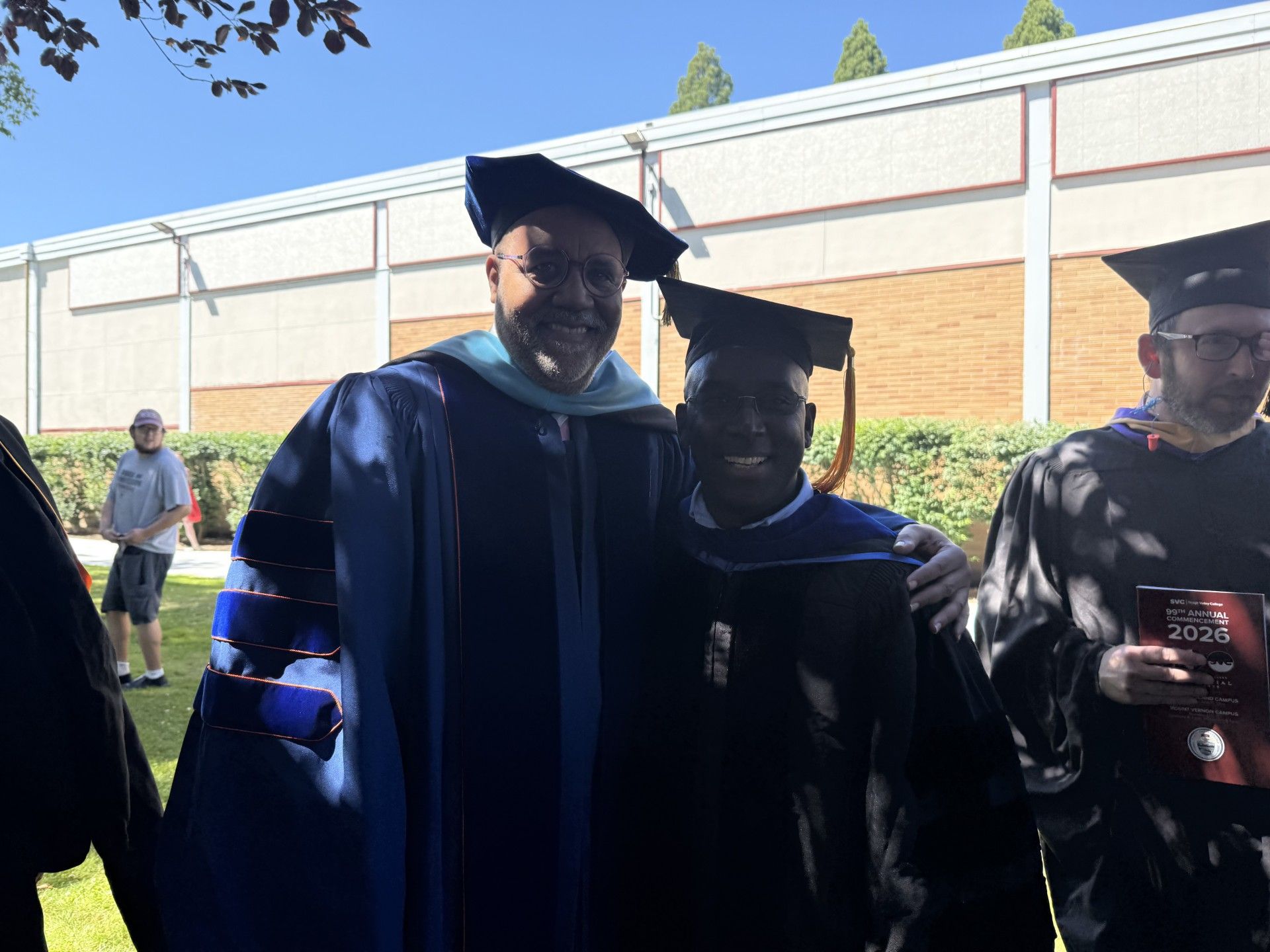
Representation alone will not solve the persistent racial disparities in computing.

The truth is that most software applications exist to manage information.
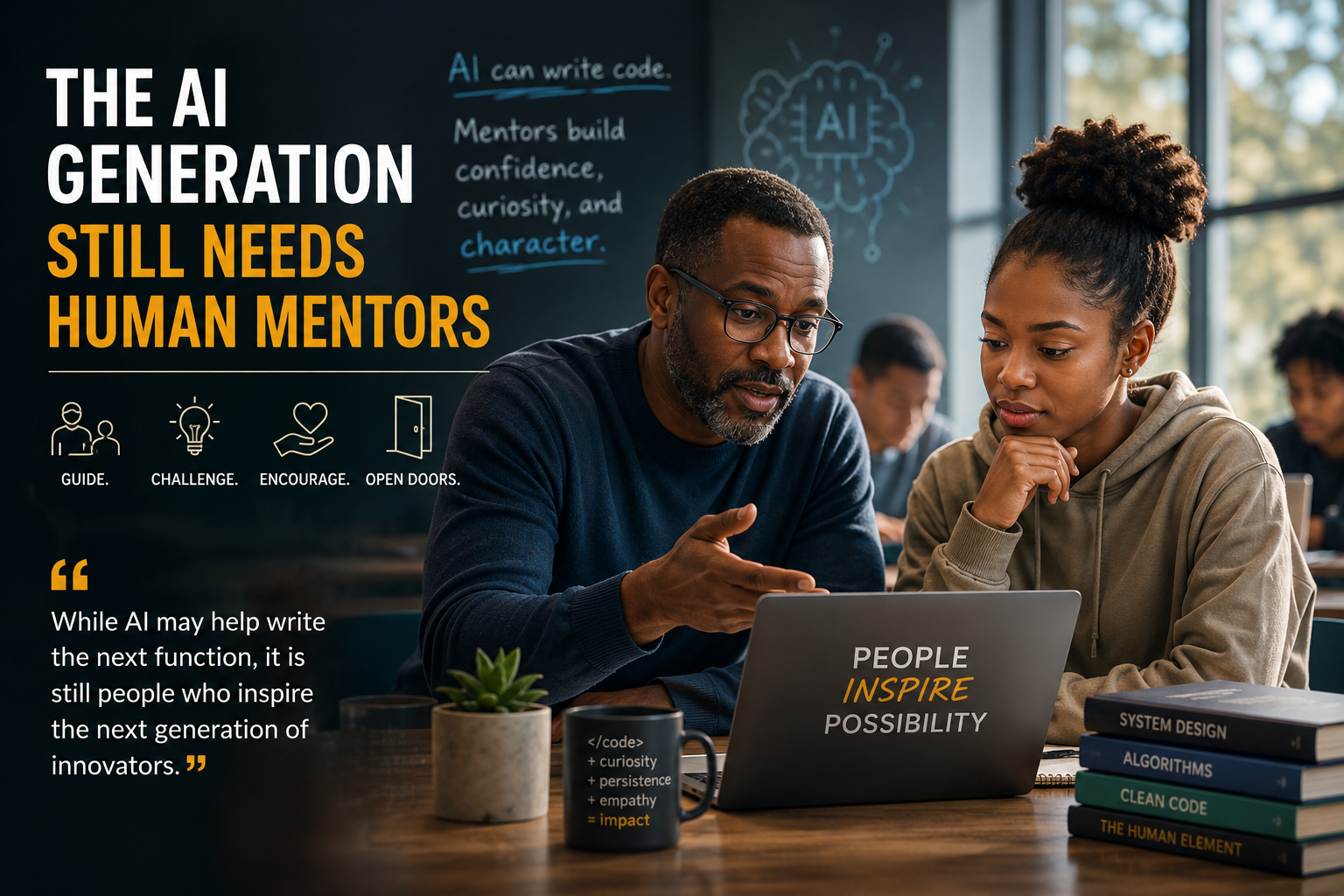
Artificial intelligence has become the newest member of nearly every software development team.

The true promise of computing is not found in the machines we build, but in the human potential we unlock when knowledge becomes accessible to everyone.

One of the reasons I value the MCT program so highly is that it represents more than technical knowledge.

Software engineering is not simply coding.

Companies often promote the idea that technical skill alone determines success.
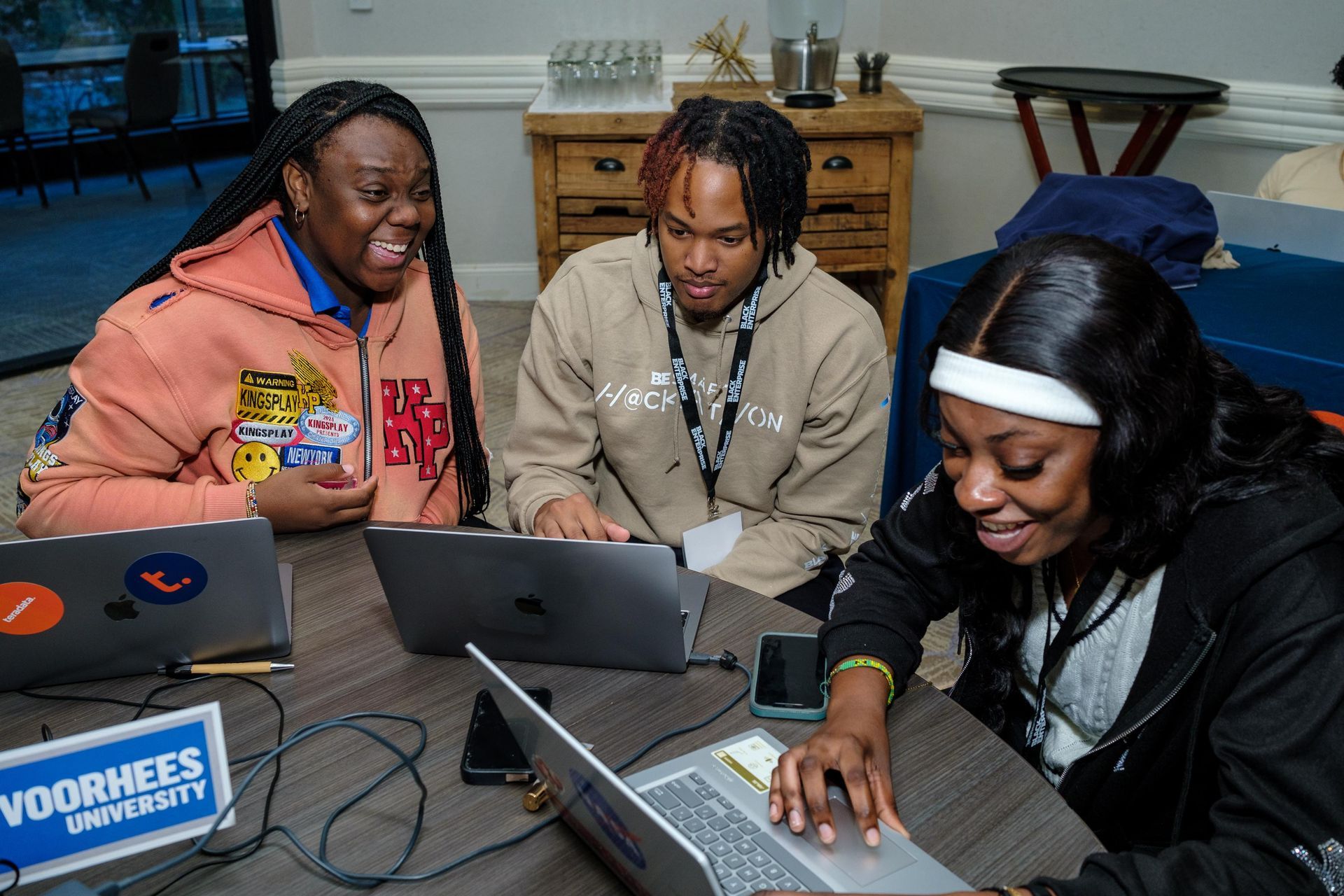
Hackathons also strengthen teamwork and communication skills.
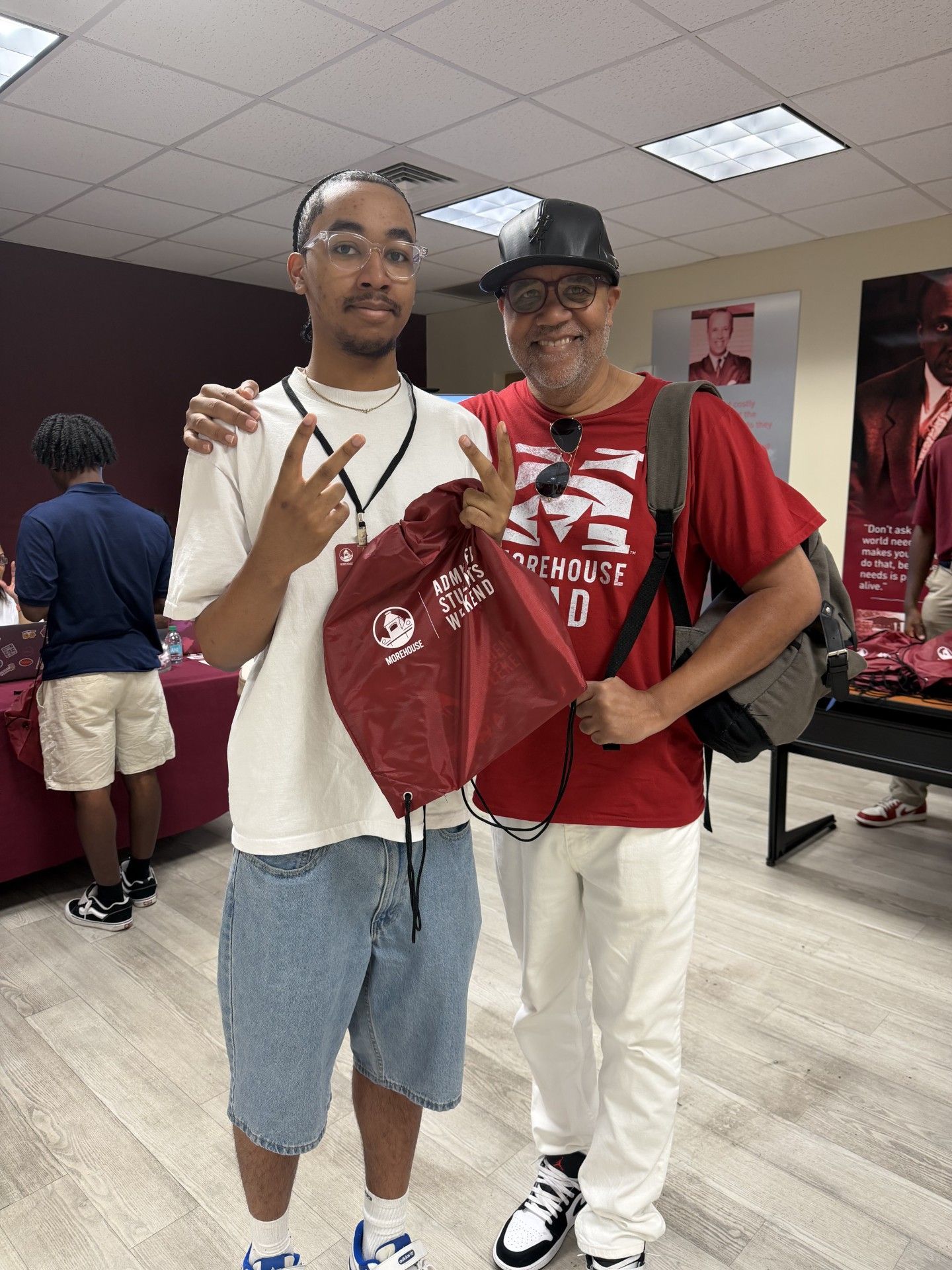
Stepping onto the campus of Morehouse College this past weekend for Admitted Students Day was more than a visit—it was a moment of reflection. As I watched young Black men walk with purpose across the yard, I found myself asking a simple but profound question: What would it have been like for me to study computer science here? My journey into computing was shaped in environments where I was often the only Black man in the room. That reality brings with it an unspoken weight—the need to prove you belong, the awareness of being watched, and sometimes, the quiet isolation that comes with underrepresentation. Standing at Morehouse, I realized that this burden is not a given. It is a condition of the environment. At Morehouse, the environment is different by design. Here, Black men are not anomalies—they are the standard. I imagined what it would feel like to learn algorithms, data structures, and software development in a space where my identity was not questioned but affirmed. Where excellence is expected, not in spite of who you are, but because of it. As a computer science professor, I understand the academic rigor required to succeed in this field. There is no shortcut through recursion, no bypass around debugging, no substitute for disciplined problem-solving. But what struck me during my visit is how much context matters. When students are free from the psychological burden of proving they belong, they can redirect that energy toward mastering the material. They can collaborate more openly, ask questions more freely, and take intellectual risks without fear. I also thought about legacy. At Morehouse, students walk the same grounds as Martin Luther King Jr.. That kind of history does something to a person. It raises the bar—not just academically, but personally. It invites students to see their education not just as a pathway to a career, but as preparation for impact. Leaving campus, I felt inspired—but also reflective. I cannot rewrite my journey, but I can appreciate what spaces like Morehouse offer the next generation. For a Black male pursuing computer science, it is more than a degree. It is an opportunity to develop skill, confidence, and identity in alignment. And that combination is powerful.